Turning resilience into advantage: key themes from the Makati Business Club x Kearney roundtable on navigating global recalibration
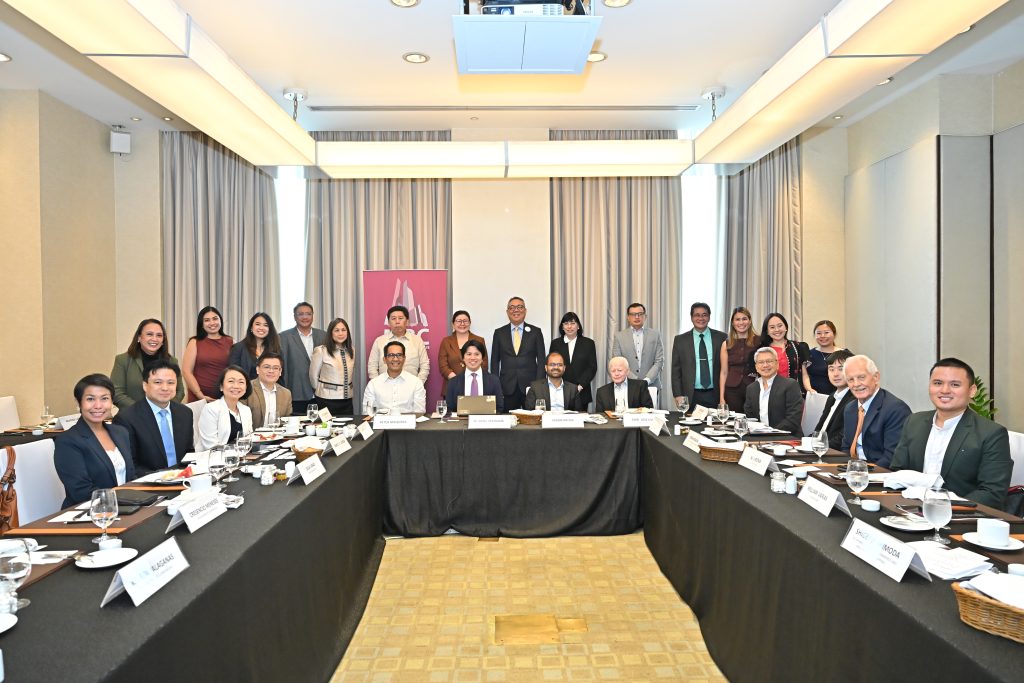
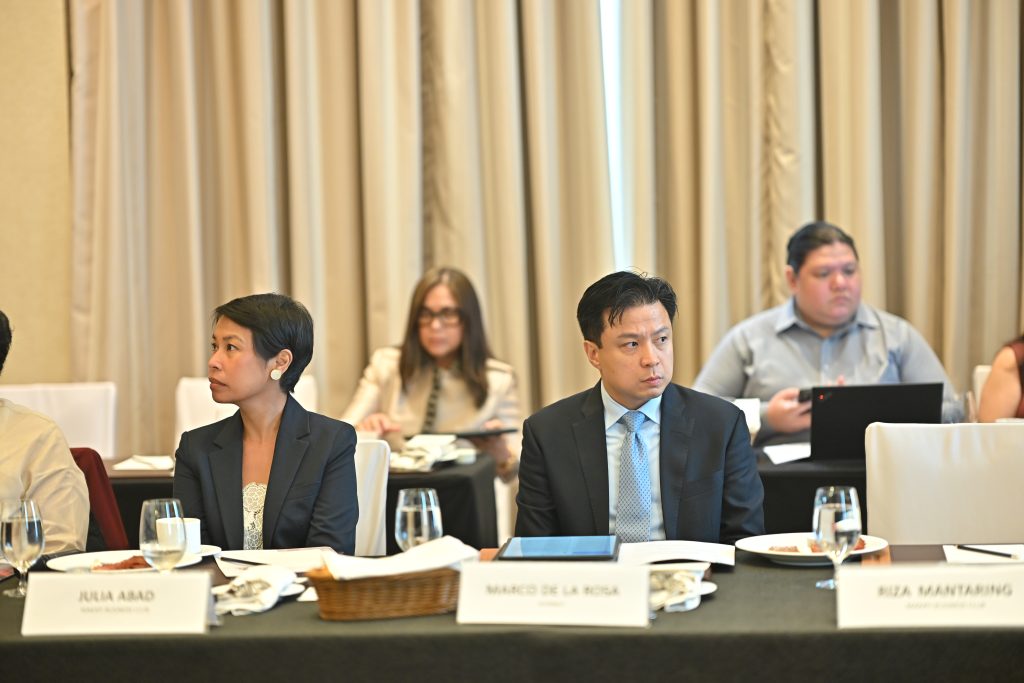
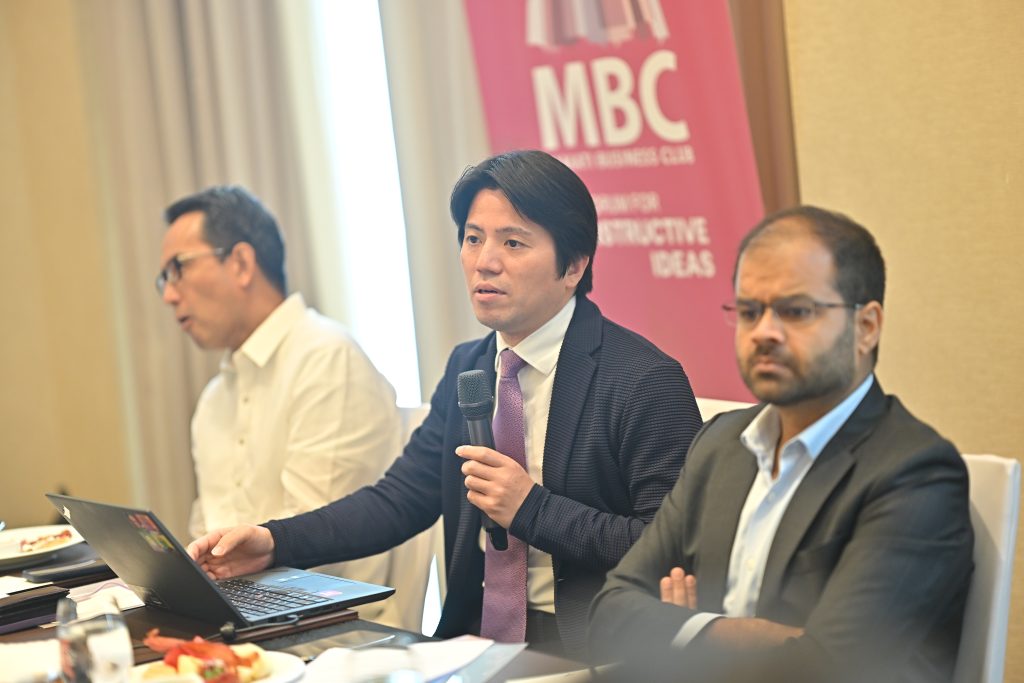
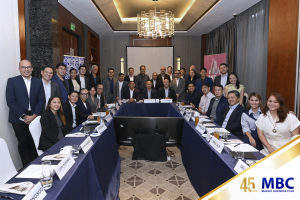
September 22, 2026 — The Makati Business Club and Kearney convened a closed-door roundtable in Makati City on August 11, 2026, bringing together senior leaders from business, diplomatic, and international organizations to discuss navigating global recalibration.
The discussion opened with a direct question: in a world of sustained disequilibrium, what differentiators matter most for Southeast Asian nations—and where is the Philippines currently advantaged or most exposed?
They converged quickly around a shared reality: geopolitical volatility, a rewiring of global investment flows, and the arrival of AI at scale are no longer future risks to plan around. They are the operating environment now, and the old playbooks—built on cost advantage and steady global rules—no longer fully apply. As one framing offered at the roundtable put it: “The dividing lines under sustained disruption are resilience versus fragility—and agency versus reaction.”
The conversation moved deliberately from the global picture, to what it means for Southeast Asia, to what leaders in the room could act on the following Monday. Here’s a rundown of what stood out.
1. Global realities
Disruption is now permanent—resilience must be designed, not improvised
Geopolitical, economic, technological, and supply-chain shocks are no longer temporary disruptions to be weathered and forgotten—they are a persistent feature of the operating environment. At Kearney’s recent CEO Retreat, 84 percent of executives said they expect the next three years to remain defined by this volatility.
The winners will be the companies and countries with the agility to adapt and the resilience to endure—those that define multiple scenarios, test where they are exposed, and plan before disruption forces their hand.
For boards, this makes structured scenario planning a core agenda item: pressure-testing strategy against multiple futures rather than a single base case.
Geopolitics is now a board agenda item—reshaping capital and trade
Governments are no longer just regulating markets; they are actively shaping them. Industrial policy, export controls, investment screening, and national security priorities now influence where companies build factories, source inputs, and deploy capital. The world has entered what Kearney’s Global Business Policy Council calls a “chokepoint economy,” where shipping lanes, energy infrastructure, semiconductors, and digital networks function as strategic instruments, not just commercial assets—and where the weaponization of trade and finance now ranks as executives’ single biggest three-year concern.
This creates risk, but also opportunity. As major powers de-risk from one another, supply chains are being redrawn toward markets seen as open, trusted, and flexible. Pax Silica is one such time-bound opportunity for the Philippines to participate more meaningfully in reconfigured technology supply chains. Nations that can offer optionality, rather than forcing companies to choose sides, stand to capture a disproportionate share of the capital in motion.
AI is becoming foundational infrastructure, not just a tool
AI will be both disruptive and constructive. It will automate parts of existing industries—including service work such as BPO—while creating new industries and ecosystems around compute, data, energy, and digital services. That reframes the competitive question: not which company launches the flashiest pilot, but which economies build the talent, data, governance, and trust that allow AI to scale responsibly and create new sources of value.
Taken together, these three realities point to the same conclusion: countries and companies that treat disruption, geopolitics, and AI as permanent conditions to be designed for—rather than temporary noise to be waited out—will set the terms of competition for the next decade.
2. Opportunities for the Philippines
Diversify beyond BPO, remittances, and consumption
These three engines have carried the Philippine economy for years, but that reliance is now a risk in itself: AI is reshaping customer interactions, while an economy that leans this heavily on BPO, remittances, and consumption will remain exposed to the volatility of global macroeconomics and geopolitics. The answer isn’t to abandon BPO, but to build on it: the sector already anchors enormous data and customer-interaction volume onshore, which is a head start into higher-value AI and data capability.
Move from cost advantage to capability advantage
The Philippines’ legacy strengths in cost-competitive, service-oriented talent remain meaningful, but the need to diversify is amplified as AI changes the nature of knowledge work and regional competitors deepen their own capabilities. The roundtable’s message was clear: the future is shifting from knowledge toward skills. The priority is not simply to train more people to use AI tools, but to develop the judgment, creativity, problem-solving, and technical depth needed to work effectively with—and effectively challenge—AI output.
Advanced manufacturing: a time-bound window
Pax Silica has created a rare, time-bound opening for the Philippines to build on and leverage existing assets: mineral resources, an established electronics and semiconductor base, and engineering talent. While there is understandable skepticism about the country’s ability to capture the opportunity, the alternative is to remain exposed to disruption in existing growth engines. The task is to move up the value chain—through advanced packaging, IC design, and compute-related manufacturing—while building the infrastructure, talent, transparency, and policy stability that investors require.
Data centers and AI infrastructure: demand-led, community-anchored growth
The Philippines has a legitimate role to play in digital infrastructure—both for its own modernization and to support international demand—but supply must be matched with credible domestic offtake. Government digitalization and enterprise modernization can help create that demand. At the same time, the buildout carries real costs in power, water, and community impact. Singapore’s experience—pausing growth, then re-linking new capacity to sustainability standards—is a useful reference point for getting the sequencing right before scaling.
3. What the Philippines must do now
Invest in talent and infrastructure, and shift from knowledge to judgment. The reskilling priority isn’t teaching more people to use AI tools—it’s building the judgment, creativity, and problem-solving that stay valuable as routine work is automated. That has to be paired with the physical foundations—power, water, digital infrastructure—on which growth is anchored.
Build transparent governance around a national road map. Across every opportunity mentioned above, the same constraint kept surfacing: not capability, but the predictability and trust in governance that investors weigh against any prospect. A credible, well-communicated plan spanning industrial policy, digital infrastructure, and workforce transition would unlock more capital than any single incentive.
Make growth inclusive. SMEs and agriculture need technology built and priced for them, not enterprise tools repackaged downward—and every major initiative needs a clear public narrative, or it risks resistance outpacing the benefit. Capability built without this will not hold.

Conclusion
The roundtable did not settle how quickly the Philippines can close its capability gap, or which opportunity—advanced manufacturing, AI, data centers—matters most. It did, however, point toward a broader conclusion.
The next three years are unlikely to reward a return to the old playbook of cost advantage and steady rules. They are more likely to reward increased capability, built deliberately and with intention: diversification beyond BPO, remittances, and consumption; the capacity to compete on more than cost; and governance credible and consistent enough to attract capital at the pace the opportunity demands. The Philippines cannot control the geopolitical realignment that has opened this window, or how long it stays open, but it can determine how prepared the country is to use it to its advantage.
Kearney would like to thank the Makati Business Club for its partnership in convening this roundtable, as well as the leaders who contributed their perspectives. We look forward to future discussions with the MBC and the wider community.
The article was originally published on Kearney’s official website.
The 2030 Enterprise: Unlocking Value through Agentic AI and Core Workflow Integration
The 2030 Enterprise: Unlocking Value through Agentic AI and Core Workflow Integration July 16, 2026 — Following its recent executive roundtable, “The 2030 Enterprise: An
BUSINESS MATTERS: Doris Magsaysay Ho: Nation-builder
BUSINESS MATTERSDoris Magsaysay Ho: Nation-builder 20 August 2026 – For nearly two decades, the Ramon V. del Rosario Award for Nation Building has recognized Filipino
Globe Business and MBC: Outline the Blueprint for Philippine Enterprises
Globe Business and MBC: Outline the Blueprint for Philippine Enterprises 20 August 2026 —The Makati Business Club (MBC), in partnership with Globe Business, successfully hosted