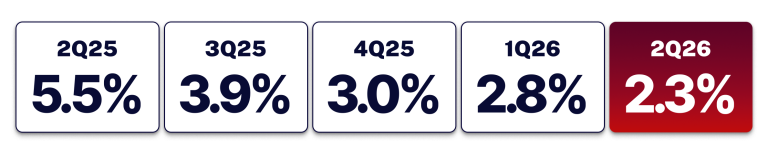
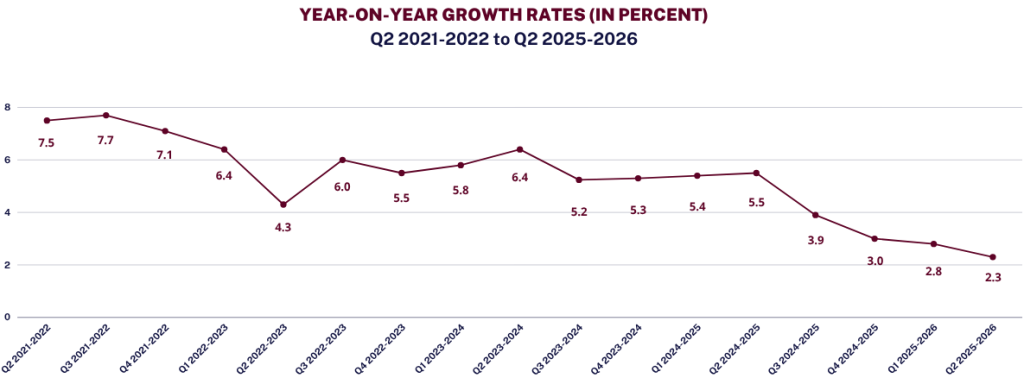
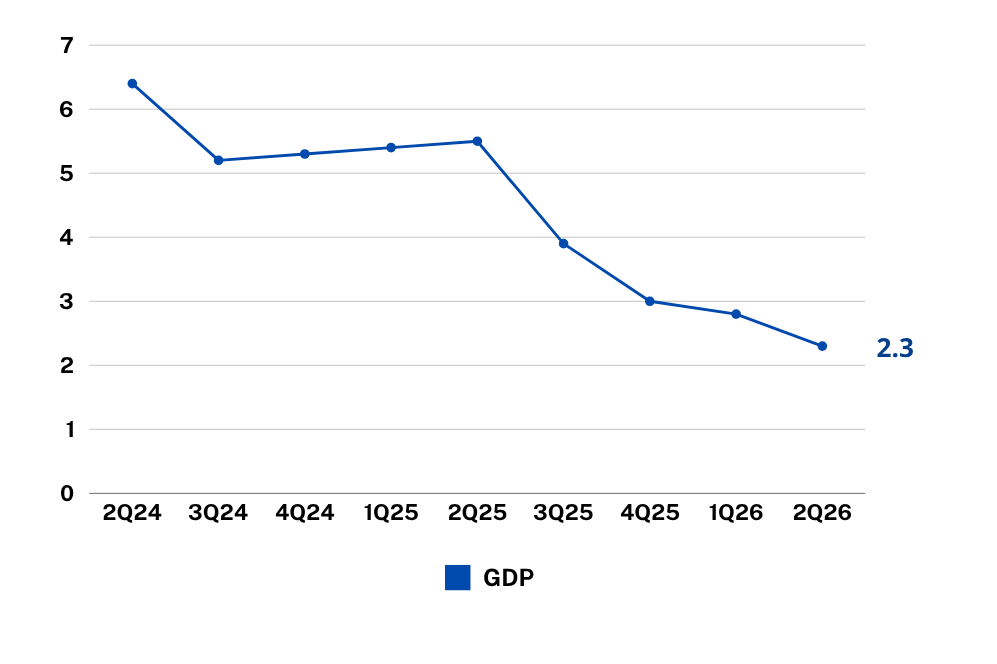
07 August 2026 — Philippine Gross Domestic Product grew by 2.3% in the second quarter of 2026, less than half of the same quarter’s growth (5.5%) in 2025, according to the Philippine Statistics Authority (PSA). This also marks another slowdown in GDP growth (2.8% in Q1 2026) — the new weakest quarterly growth performance of the Philippines excluding the pandemic period.
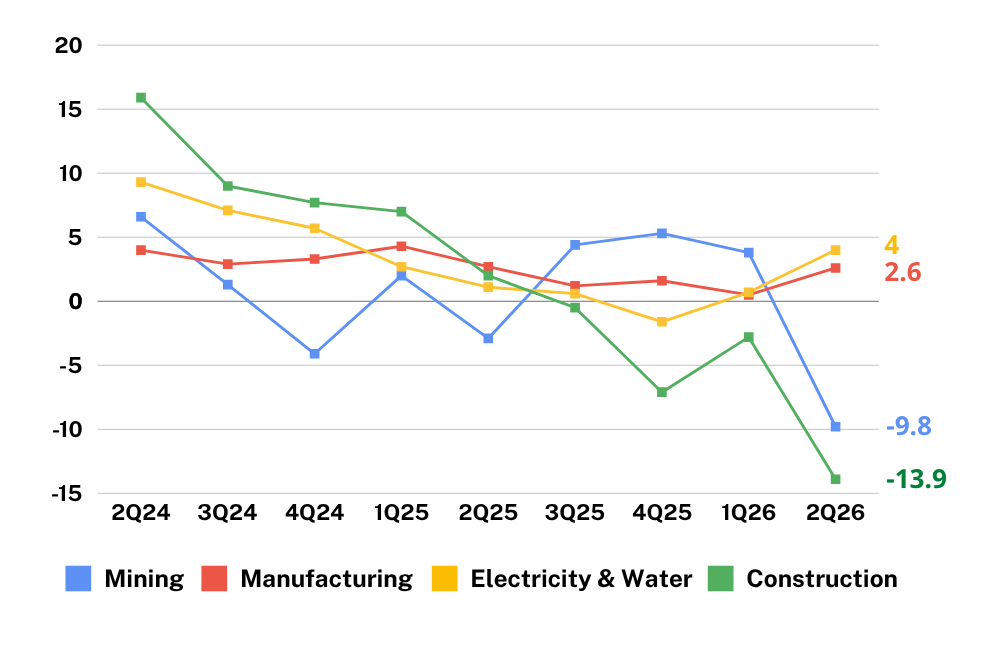
The GDP growth for this quarter is significantly lower than the government’s growth target of 3.5% to 4.5% for 2026. In a July 9, 2026 statement, the growth target was adjusted by the Development Budget Coordination Committee (DBCC) “amid heightened domestic and external uncertainties, including the lingering effects of governance-related issues, geopolitical tensions in the Middle East, and other global developments affecting business and consumer confidence.” The further slowdown in Q2 suggests that these pressures are increasingly weighing on domestic economic activity, with weakness becoming more apparent across the industrial sector and household consumption.
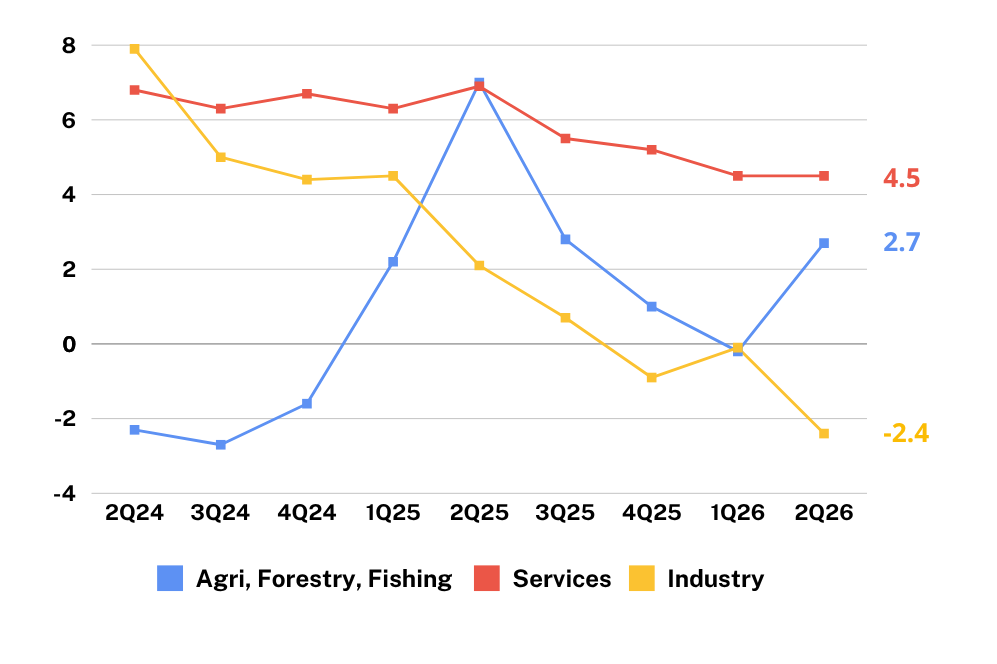
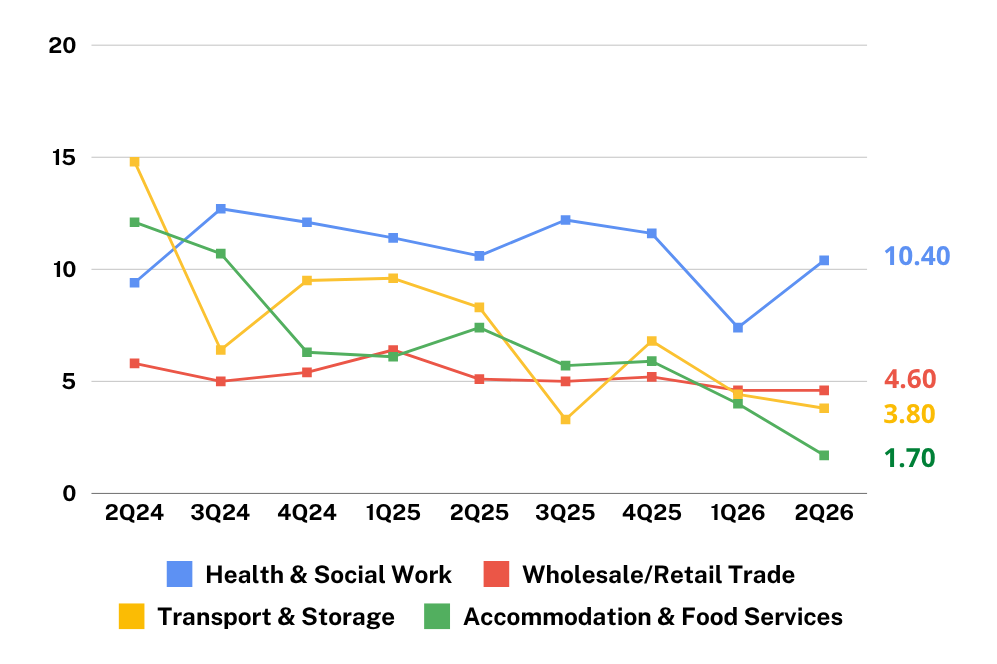
On the supply side, the services sector still remains the primary driver of growth at 4.5% and contributes 2.8 percentage points to overall GDP growth. Meanwhile, the agriculture, forestry, and fishing sector grew by 0.2%, up from the -0.2% contraction the previous quarter. Meanwhile, the industry declined by 2.4%. Among industries, the fastest-growing sectors in Q2 2026 were Education (+12.7%), Human Health and Social Work Activities (+10.4%), and Wholesale and Retail Trade; Repair of Motor Vehicles and Motorcycles (+4.6%). The largest contributors to overall GDP growth were Wholesale and Retail Trade (0.8 percentage point), Education (0.6 percentage point), and Manufacturing (0.4 percentage point).
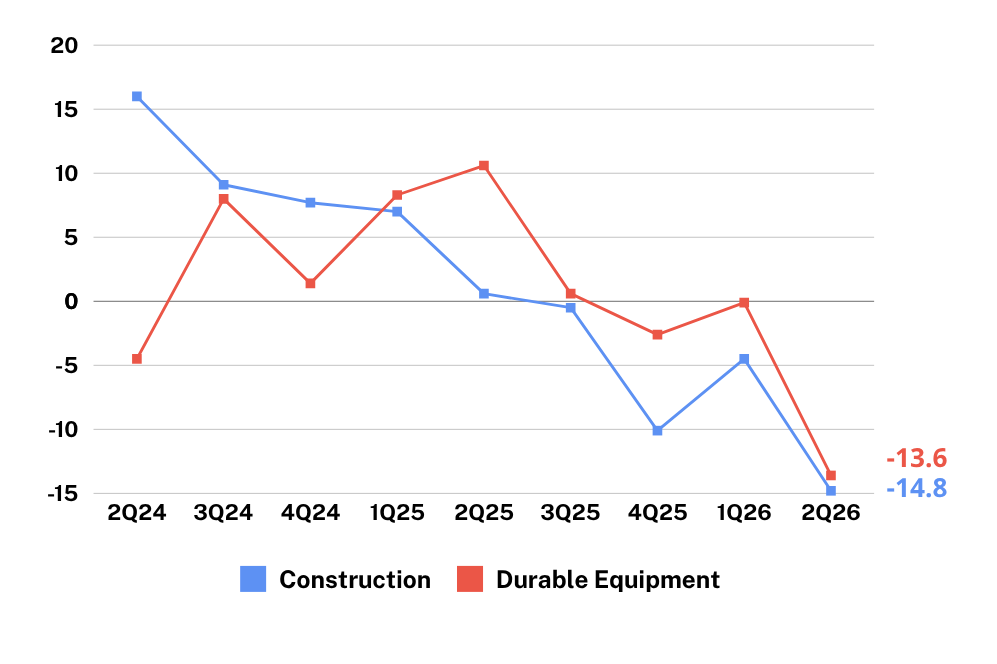
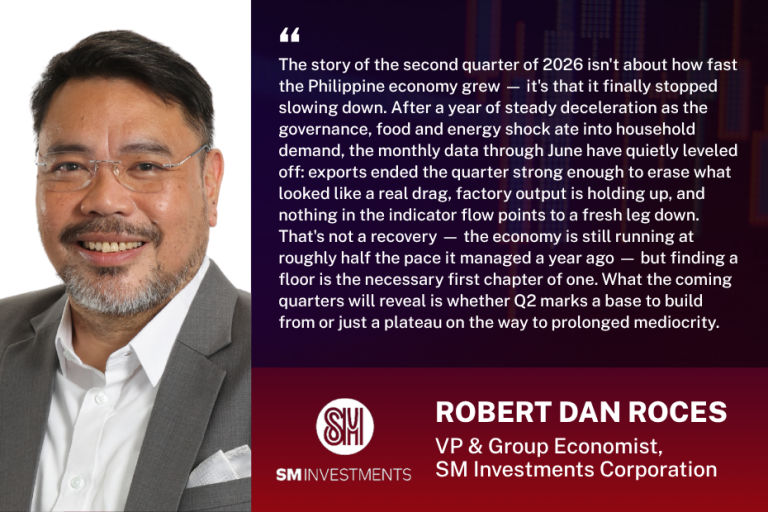
On the demand side, Valuables still recorded the fastest growth at 23.3% in Q2 2026, followed by Exports of Goods (+17.0%), Government Final Consumption Expenditure (GFCE) (+8.3%), and Exports of Services (+6.9%). Household Final Consumption Expenditure (HFCE) remained the largest contributor to overall GDP growth, contributing 1.9 percentage points. However, this was lower than its 2.2-percentage-point contribution in Q1 2026, indicating softer household-led growth during the quarter. In contrast, government consumption contributed 1.5 percentage points, nearly double its 0.8-percentage-point contribution in the previous quarter. The changing composition of demand suggests that stronger government spending increasingly cushioned weaker private consumption, as households faced continued pressure from higher prices and broader economic uncertainty. Notably, investment, as measured by Gross Capital Formation, contracted by 9.2% in Q2 2026, marking its fourth consecutive quarterly decline since Q3 2025 and pointing to continued weakness in investment activity. The sustained decline in capital formation is a particular concern, as weaker investment means less spending on the infrastructure, equipment, and other assets that businesses and the economy need to expand. It also suggests that despite strong growth in some areas, such as valuables and exports, investment activity has yet to show a broader recovery.
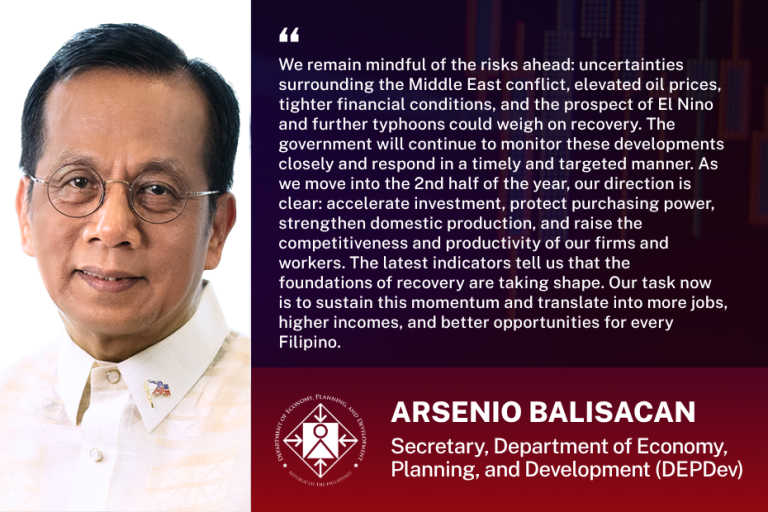
The Congressional Policy and Budget Research Department (CPBRD) recently projected that the Philippine economy would likely post its slowest growth in over 17 years outside the pandemic in the second quarter of 2026, with its estimate ranging from 1.42% to 4.07%. According to the Department of Economy, Planning, and Development (DepDev) Secretary Arsenio Balisacan, the Philippine economy grew by 2.3 percent year-on-year in the second quarter of 2026, reflecting continued headwinds from both global and domestic factors. While external uncertainties remained significant, “recent indicators give us reason for cautious optimism that the economy may already be entering the early stages of recovery”, Balisacan says. The government says it will accelerate the implementation of high-impact infrastructure projects through catch-up plans, clear milestones, and accountability measures, alongside efforts to strengthen governance reforms, transparency, and business processes to restore investor confidence.
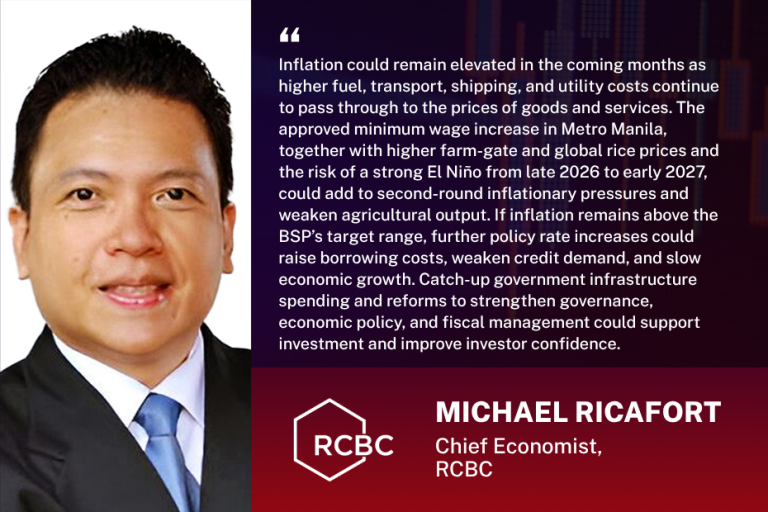
Prospects on the Philippine economy are not optimistic due to the looming risks of a super El Niño, which could persist until early 2027. According to reports citing PAGASA, the country is expected to experience below-normal rainfall and possible drought conditions that could affect key sectors such as agriculture, energy, and water resources. Prolonged dry spells may reduce agricultural output, particularly for water-dependent crops, while lower water levels could affect irrigation and hydroelectric power generation. These disruptions could increase food prices, raise production costs, and put additional pressure on household incomes and business operations. The potential economic impact of a prolonged El Niño highlights the importance of strengthening climate resilience through investments in water management, agricultural support, and measures to ensure stable food and energy supply.
Meanwhile, according to the Department of Energy (DOE), the Philippines recorded the highest average electricity rate in Southeast Asia in June, reaching Php12.43 per kilowatt-hour, driven largely by power supply constraints in the Visayas, where several power plants were forced offline and the region relied on more expensive imported power from Luzon and Mindanao. Elevated electricity prices increase operating costs for businesses, particularly energy-intensive industries such as manufacturing, and can reduce the country’s attractiveness to investors seeking more cost-competitive locations. For households, higher power bills can also reduce disposable income and weigh on consumer spending. Addressing high electricity costs requires improving power supply reliability, accelerating investments in renewable energy and additional generation capacity, and implementing reforms that enhance efficiency and competition in the energy sector.
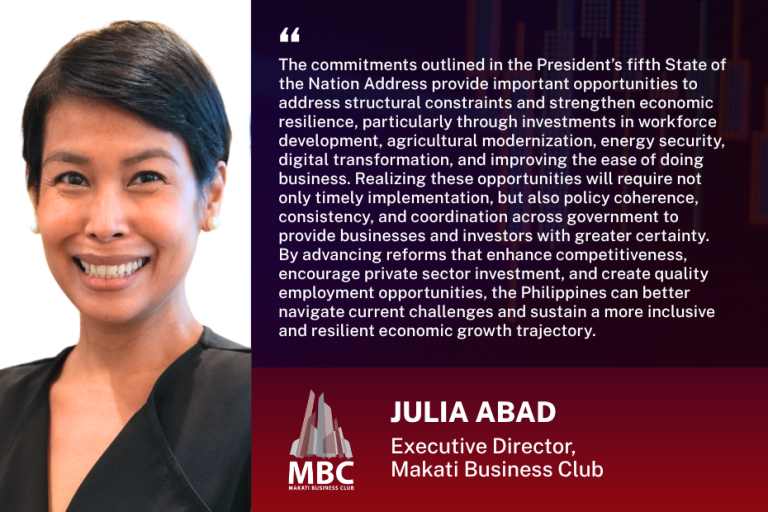
However, despite the near-term challenges facing the Philippine economy, there remain positive opportunities to strengthen growth through the continued implementation of key reforms highlighted in the President’s fifth State of the Nation Address. The administration’s focus on workforce development, agricultural modernization, energy security, digital transformation, and improving ease of doing business can help address structural constraints and enhance the country’s competitiveness. If effectively translated into concrete programs and sustained reforms, these commitments can boost investor confidence, create more quality jobs, and support a more resilient and inclusive economic recovery.